Texture Maker for Minecraft PE
- 4.2
- Rating
- 1.00M
- Installs
- Free
- Price
 Analysis by App-foxy
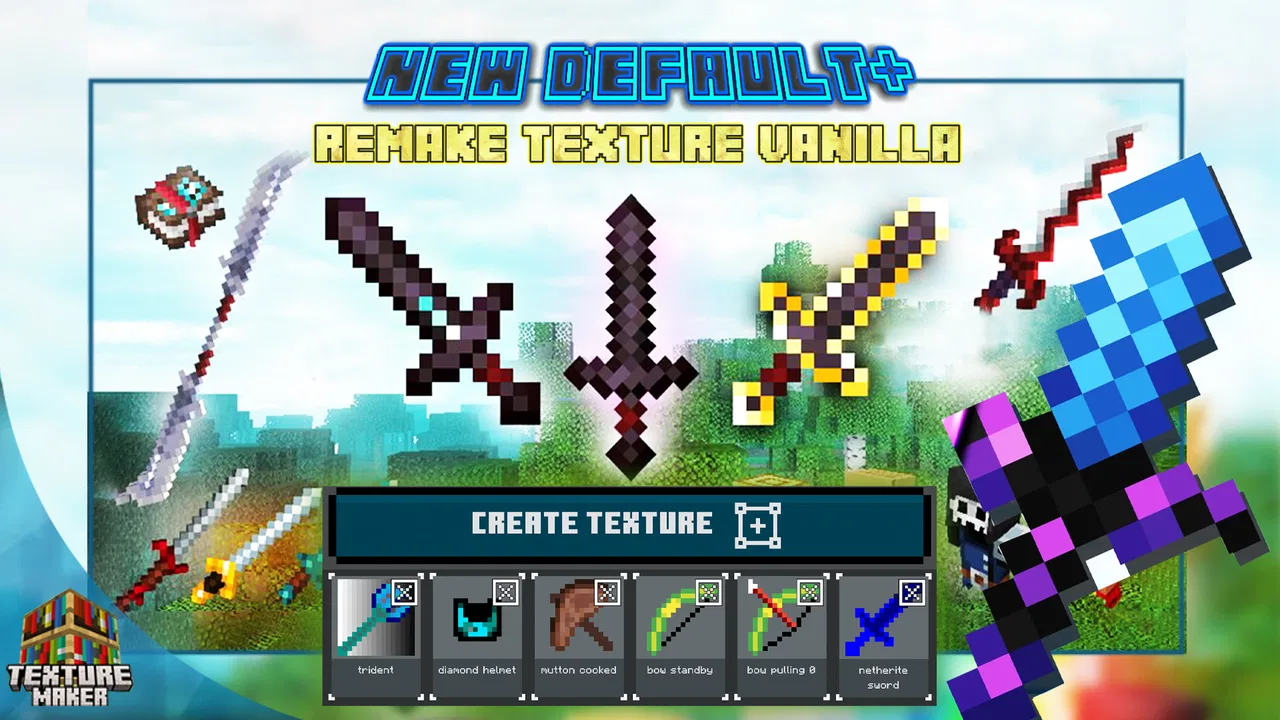
Texture Maker for Minecraft PE is the kind of art-and-design app I would open when I want to change the feel of a Minecraft world without building every visual asset from scratch. It is free to install, aimed at Teen users, and made by JoyCraft Digital. In my experience, its appeal is less about replacing Minecraft itself and more about giving players a practical creative layer for custom textures, shaders, and related visual changes.
That distinction matters. This is not a full drawing studio, a general 3D modeling package, or a substitute for Minecraft’s own gameplay. It is a focused tool for people who want to experiment with the appearance of their worlds. I found the idea especially useful for players who enjoy visual customization but do not want to begin with a complicated desktop workflow.
How the app feels to use across different abilities and situations
I find this app’s visual focus most useful when I treat it as a way to make Minecraft easier to read as well as more personal. A calmer palette or clearer contrast can matter more than adding detail, especially on a small screen or during a quick play session. That makes comfort a practical design goal, and it leads naturally to how I’d test changes before settling on a look.
You May Also Like

 Blood Strike: 2.5 Anniversary
Blood Strike’s Loadouts Turn Every Drop Into a Tactical Gamble
A close look at Blood Strike’s custom loadouts: how fast access to signature weapons reshapes its battle royale rhythm, rewards preparation, and narrows the gap between fights.

 Pandora - Music & Podcasts
Pandora’s Music Is Easy to Start, but Harder to Recover
Pandora’s strength is its low-effort path from a seed to a station. Its weak spot is how much confidence it asks you to place in connection, setup, and quiet recovery.

 8 Ball Pool
 Is Built on Rivalries, Rematches, and Routine
A close look at the rivalries, rematches, shared routines, and unanswered safety questions that turn a quick pool match into a persistent mobile community.

 Samsung Music
’s Quiet Strength Is Playing What You Already Own
Its reach comes less from spectacle than from dependable access to a personal library. That simplicity is both the app’s strongest retention engine and its ceiling.

 AccuWeather: Weather Radar
AccuWeather Review: A Quick, Clear Forecast for Everyday Decisions
For everyday plans, the best forecast is the one you can understand quickly. AccuWeather makes rain timing, radar, and local conditions easy to act on, with a few trade-offs.

 Hill Climb Racing
Why Hill Climb Racing Still Turns Crashes Into One More Run
A tiny car, a bumpy hill and one more upgrade: Hill Climb Racing keeps resurfacing because its simple chaos makes every near-miss feel personal.
More From Our News Desk



Readability and navigation come first
The biggest test for an app like this is whether I can understand what each part is for before I start editing. Texture work can quickly become confusing because a small visual change may affect blocks, items, menus, or the overall atmosphere. Texture Maker for Minecraft PE works best when I approach it as a guided creative utility rather than expecting the depth of professional image software.
For a first session, I would recommend moving slowly through the available categories and checking what each option changes before making a large set of edits. That simple habit makes the experience easier to follow and reduces the chance of creating a pack that looks inconsistent. If you are helping a younger player, it also gives them a clear way to learn: adjust one visual element, inspect the result, then decide whether to continue.
The app’s purpose is easy to understand from the start. Its store short description is “Texture Maker,” while the broader promise centers on making a Minecraft world feel more lively through visual customization. That narrow focus is helpful for navigation because I am not searching through unrelated editing tools, social features, or general art projects.
Still, readability is not only about labels. A texture tool needs a clear relationship between an edit and its result. I found that the most sensible workflow is to keep notes about what I changed, especially when testing several visual styles. A short list such as “stone, grass, sky, and lighting” can prevent confusion when a world starts to look different and I cannot immediately remember why.
For users who prefer large text, strong contrast, or a very uncluttered interface, the experience may depend on the phone or tablet being used. A larger screen gives each control more breathing room, and rotating the device or changing system display settings may make the workspace more comfortable. I would not choose a small screen if detailed visual checking is important to you.
Motor and sensory considerations for creative editing
Texture editing can be demanding in a different way from ordinary reading apps. It asks for repeated taps, careful selection, visual comparison, and patience when checking whether a change is actually an improvement. Someone with limited fine-motor control may find rapid editing tiring, particularly when several small controls sit close together. I would treat the app as better suited to short, deliberate sessions than to long periods of continuous adjustment.
One useful approach is to separate designing from judging. I might make a few changes first, then pause and inspect the overall look instead of trying to decide whether every single edit is perfect immediately. This reduces the number of repeated actions and makes the process less stressful for anyone who finds constant visual comparison tiring.
The sensory side also deserves attention. Custom textures and shaders can make a world feel more dramatic, but stronger visual effects are not automatically better for every player. If bright contrast, busy patterns, or intense lighting feels uncomfortable, I would favor a restrained style with simpler surfaces and fewer competing effects. The creative advantage here is that customization can work in either direction: it can add atmosphere, but it can also make a scene calmer and easier to read.
I would also avoid judging a pack only inside the editing screen. Minecraft environments change with daylight, caves, water, weather, and movement. A texture that looks attractive in one preview may become visually noisy during ordinary play. Checking several familiar locations is a practical way to catch problems before committing to a style.
Players who rely on sound or non-visual cues should remember that this is fundamentally a visual design tool. It may support a more comfortable visual presentation, but it does not turn Minecraft into a different kind of interface. I see that as an important boundary: the app can help adjust what the world looks like, yet it cannot replace features designed specifically for alternative interaction needs.
Situational access: when the app is most useful
A realistic use case is a player who has a free evening, wants a more personal Minecraft world, and does not want to learn desktop modding tools. I would start with one small goal, such as creating a softer-looking building palette or giving an existing world a more distinctive mood. After that, I would test the result in a familiar area rather than changing everything at once.
It can also work well for families or friends who want to compare visual ideas. One person might prefer a clean, bright appearance, while another may want a darker fantasy mood. Because the app sits between casual play and more involved design work, it gives beginners something concrete to experiment with without requiring them to understand every technical detail immediately.
For students or hobby artists, the app offers a simple way to think about consistency. A good texture set is not just a collection of attractive images. Colors, contrast, scale, and visual weight need to feel related. I found that using a limited palette first can produce a more coherent result than adding dramatic changes everywhere. That is a design lesson the app makes easier to practice because the subject is familiar and immediately visible in Minecraft.
On the other hand, I would not use this as my main tool if I needed precise professional asset production, advanced layer management, or a carefully controlled pipeline for a large project. A desktop graphics editor is usually better for exact pixel work, file organization, and detailed revision. Texture Maker for Minecraft PE is more appealing when convenience and experimentation matter more than complete control.
The free price makes trying it less of a commitment, although in-app purchases cost $2.99 per item. I would spend time understanding the free experience before buying anything. For a casual player, the free portion may be enough to decide whether the workflow feels comfortable. For a dedicated creator, the purchase model is worth considering as part of the overall cost of building a larger collection of custom designs.
What the current version offers in practical terms
The current version is 1.9.6, and the app requires Android 7.0 or later. That makes device compatibility an early question for anyone using an older phone or tablet. I would check the operating system before planning a project, especially if the app is intended for a shared family device rather than a recent personal phone.
Texture Maker for Minecraft PE has reached over a million installs and carries an average rating of 4.2 from around twenty-seven thousand ratings. Those figures suggest that it has found a substantial audience, but they do not tell me whether it will suit a particular editing style. I would still judge it by the kind of control and comfort I need rather than treating popularity as proof that every workflow will feel smooth.
The app has also received 538 written reviews, which is enough to show that people are actively discussing their experiences rather than leaving only a handful of reactions. When I evaluate an app in this category, I pay more attention to repeated practical themes than to a single enthusiastic or negative comment. Texture tools can feel completely different depending on screen size, patience, and how ambitious the user’s project is.
Useful workflows that are easy to overlook
My first practical tip is to design around a visual problem instead of a vague wish to make everything “better.” For example, if a world feels too flat, I would focus on contrast between nearby materials. If it feels too busy, I would simplify the palette and reduce competing patterns. This produces clearer decisions than changing blocks randomly.
My second tip is to create a small test area in Minecraft before applying a style broadly. A village, a storage room, or a short path containing several common blocks can reveal whether textures work together. This is more reliable than inspecting isolated assets because Minecraft is experienced as a moving environment, not as a gallery of separate squares.
My third tip is to keep an original version of the project untouched while experimenting. Creative apps encourage quick changes, and it is easy to lose track of which adjustment caused an unwanted result. Maintaining a simple “before” state gives me a safe comparison point and makes it easier to return to a familiar appearance.
A fourth trade-off is worth noting: more visual detail can make a world feel richer, but it can also reduce immediate clarity. In a building game, I need to recognize surfaces quickly while moving, collecting materials, or finding a route. I would choose decorative complexity for showcase areas and a simpler treatment for places where fast recognition matters.
Remaining barriers and who should skip it
The main barrier is that the app assumes the user is comfortable making visual judgments. Someone who wants a one-tap transformation may find the creative process slower than expected. The result depends on choices, testing, and revision, so it is not ideal if you want a completely automatic makeover with no learning curve.
Another limitation is the gap between mobile convenience and professional precision. A phone is excellent for quick experimentation, but it is less comfortable than a large monitor when comparing many small details. If your goal is a highly controlled texture pack with exact edits across numerous assets, I would choose a dedicated graphics program and use this app only if its particular workflow suits the project.
Users who need strong non-visual accessibility support should be cautious. The app’s purpose is visual customization, so it cannot be treated as a complete accessibility solution for Minecraft. Likewise, players who are sensitive to busy patterns or intense effects should test changes gradually and keep the visual style restrained.
The Teen content rating is another reason I would involve a parent or guardian when a younger child wants to use it. The rating does not change the app’s creative purpose, but it is still part of deciding whether it belongs on a particular device. I would also explain in advance that optional purchases are available, so the free download does not automatically mean every item is included without cost.
How it compares with the usual alternatives
Compared with downloading ready-made texture packs, this app is more hands-on. A prebuilt pack is faster when I already know the look I want, while Texture Maker for Minecraft PE is better when I want to shape the result myself. The trade-off is time: downloading is convenient, but creating or adjusting a style gives me more personal involvement.
Compared with a general mobile drawing app, this tool is more directly connected to the Minecraft customization task. A drawing app may offer deeper brushes, layers, and export control, but I would need to understand the relevant Minecraft asset structure and manage more of the process myself. Texture Maker is the more approachable choice when the goal is to experiment inside a familiar game context rather than become a full digital-asset technician.
Compared with desktop tools, the app wins on immediacy. I can work from a mobile device without setting up a larger production environment. Desktop software wins when precision, organization, and repeated professional revisions are the priority. Neither option is universally better; the right choice depends on whether I value quick creative access or detailed control.
My inclusive verdict for everyday Minecraft creators
I recommend Texture Maker for Minecraft PE to players who want a more personal visual style and are comfortable learning through small experiments. It is especially suitable for casual creators, families testing ideas together, and Minecraft fans who find full desktop workflows intimidating. The free entry point makes it easy to explore, while the focused Art & Design category keeps the purpose clear.
I would skip it if I needed advanced production controls, a fully automatic result, or a tool designed around non-visual interaction. I would also think twice if I only want to download finished packs, because the value here comes from participating in the design process rather than simply applying someone else’s work.
My final advice is to begin with one modest visual goal, use a familiar Minecraft test area, and judge comfort as carefully as appearance. If the controls, screen size, and visual effects work for you, the app can turn ordinary mobile play into a surprisingly approachable design exercise. Its strongest quality is the balance between creative control and a mobile-friendly starting point, provided you accept that good results require patience and that accessibility needs may extend beyond what a visual texture editor can provide.
FAQs for Texture Maker for Minecraft PE
01What is Texture Maker for Minecraft PE, and what can I create with it?
Texture Maker for Minecraft PE is a mobile tool designed to help players customize the appearance of Minecraft Bedrock Edition content. Depending on the available editor features, you can create or modify textures for blocks, items, mobs, GUI elements, and other resource-pack components. It is mainly intended for visual customization, so it does not add new gameplay mechanics by itself.
02Is Texture Maker for Minecraft PE compatible with my version of Minecraft?
Compatibility can depend on your device, operating system, Minecraft Bedrock Edition version, and the way the application exports resource packs. Before downloading, check the app’s latest update information and supported formats. Some features may work differently after Minecraft updates, and older projects or exported packs might require adjustments if Mojang changes resource-pack requirements.
03Do I need any special skills to use Texture Maker for Minecraft PE?
You do not usually need professional graphic-design experience to begin. The application is aimed at mobile users and generally provides editing tools that make basic texture creation accessible. However, producing polished packs can take practice, especially when working with pixel-art proportions, transparency, animation frames, and correct texture dimensions. Familiarity with Minecraft resource packs is helpful but not essential.
04How do I use the textures I create in Minecraft PE?
After finishing a project, you typically need to export it as a compatible Minecraft resource-pack file, commonly in MCPACK or another supported format. Opening the exported file on your device should allow Minecraft to import it, after which you can activate the pack from the world or global resource-pack settings. Always keep a backup before replacing an existing pack.
05Is Texture Maker for Minecraft PE free, and are there advertisements or in-app purchases?
The cost and available features may vary according to the version distributed through the Android or iOS store. Some editions may be free to install while including advertisements, locked tools, premium content, or optional purchases. Review the store listing before downloading to confirm pricing, subscription details, advertising behavior, and whether exporting or advanced editing features require payment.
Pros
- Creates custom Minecraft PE textures without advanced design skills.
- Supports detailed edits for blocks
- items
- mobs
- and other game assets.
- Useful preview tools help check how textures look before exporting.
- Can inspire unique resource packs for creative or multiplayer projects.
- Suitable for experimenting with different visual styles on mobile.
Cons
- Some advanced editing features may require time to learn.
- Large texture packs can take up significant device storage.
- Results depend heavily on the quality of the source textures.
- Compatibility may vary between Minecraft PE and newer Bedrock versions.
- Exporting or importing packs can involve extra file-management steps.

Texture Maker for Minecraft PE
Gallery